Reflections On Another Year For Me & My Horses
2009 held a lot of good things for me. I’m thankful for my husband most of all. After 35 years of marriage, he still endures my horse craziness. He is the reason I still have horses today because I almost gave them up several times for economic reasons. I love him very much.
I’m glad I have my horse buddies. Without them, my horse life would not be as much fun. My trainer is very tolerant of my weaknesses & phobias. Lessons are fun and vary in intensity. I will master my weak points. I can also say she is a good friend. The stable owner has been a friend since her mother owned the place. I’ve ridden many Saturday morning group lessons with her.
I’m extremely fortunate to have the horses I own today. I’m glad I took the time to search for the right horse. Every time I ride, they teach me to be a better rider.
So as the hours wind down for 2009, take a few minutes to reflect on the past year. Learn the lessons taught from the bad times. Be thankful for all the good times that have occurred over the year. As for 2010, plan to make your horse experiences better.
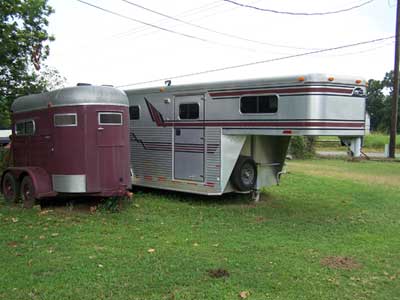 Dollar is my 6 year old palomino gelding. I named him after the horse John Wayne rode in his movies. Never mind that the movie Dollar was a sorrel, I am just one of those avid “Duke” movie fans. Anyway, Dollar is just about as laid back as a horse can get. I haven’t found anything that bothers him. He also has as much curiosity as any cat. He’s always looking to see what you are doing and at times it seems like he would really rather help you with whatever it is you’re doing. He’ll walk along side of the tractor while the pasture is being mowed looking like he’s trying to tell you how to drive & mow. He stands guard by a ladder while you are on the roof. He also likes to floss his teeth with the tail of the lead rope you have him tied with.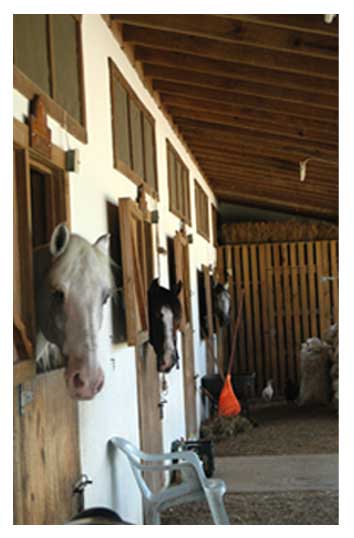
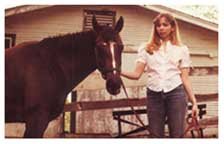 This is where I come in. I had never owned a horse, I had never taken care of a horse and I had only ridden a few backyard pets that my friends had. I was a stupid 20 something and was just as horse crazy then as when I was at 4. Oh yeah, I was also recuperating from a very bad fall off a lesson horse trying to learn how to jump fences. I was told Iggette was going to the sale barn and I just couldn’t let that happen. I talked my husband into buying her. I wasn’t sure what I was going to do with her, but I knew I couldn’t let her go to the sale where she might end up in the hands of the killers. I bought her without even going to look at her first. This is how I became a novice owner.